
Growing fresh vegetables does not require a large backyard. With the right layout, suitable crops, and a little planning, even a balcony, patio, narrow side yard, or small sunny corner can become productive. The best small vegetable garden ideas focus on using available space wisely instead of trying to fit too many plants into one area.
For beginners, the goal should be simple: choose vegetables you actually enjoy eating, give them enough light, use healthy soil, and make watering easy. A compact garden can be attractive as well as useful, so there is no need to sacrifice the look of your outdoor space.
This guide shares practical small vegetable garden ideas that work for different spaces and budgets. You will also learn which vegetables are easier to grow, how to arrange them, and how to avoid common mistakes.
Start With the Space You Already Have
Before buying seeds or containers, look at your available area. Measure the space and notice how much direct sunlight it receives. Most fruiting vegetables, such as tomatoes and peppers, need plenty of sunlight, while some leafy greens can handle less.
One of the simplest small vegetable garden ideas is to begin with one manageable growing area instead of creating a complicated garden all at once.
Think about access, too. You should be able to reach every plant for watering, harvesting, and checking for pests. A garden that looks full but is difficult to reach can quickly become frustrating.
Use a Compact Raised Bed
A small raised bed can turn an unused section of a yard into an organized growing area. A compact bed is especially useful because you can control the soil and keep plants grouped together.
Among practical small vegetable garden ideas, raised beds are useful for beginners because the growing area is clearly defined. You can divide the bed into sections and grow several crops without needing long rows.
Keep the bed narrow enough that you can reach the middle without stepping on the soil. This makes routine care easier and helps protect the roots.
Grow Up With a Trellis
When floor space is limited, use vertical space. A trellis, simple frame, or sturdy garden support can help climbing plants grow upward rather than spreading across the ground.
Vertical growing is one of the smartest small vegetable garden ideas because a single corner can support plants such as peas, beans, and suitable cucumber varieties. Always choose a support that can handle the mature plant and its produce.
Place taller structures where they will not block sunlight from shorter plants. This small planning step can make the entire garden more productive.
Try Container Gardening
These small vegetable garden ideas can be adapted to a sunny balcony, patio, or narrow backyard.
You do not need a traditional garden bed to grow vegetables. Large pots, grow bags, buckets designed for planting, and window boxes can work well when they have drainage and enough space for the selected crop.
Container gardening is one of the easiest small vegetable garden ideas for renters, apartment residents, and anyone with a patio or balcony. It also gives you flexibility because containers can be moved when necessary.
Choose the container based on the plant, not just its appearance. Tomatoes, peppers, leafy greens, radishes, and herbs can all be grown in containers, but their space and watering needs are different.
Make a Small Salad Garden
Use the following small vegetable garden ideas as a starting point, then adjust them to your own conditions.
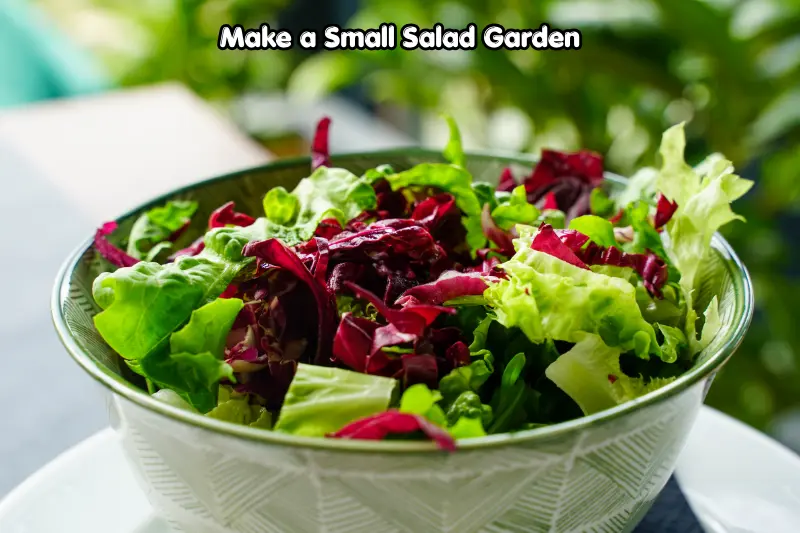
If you want quick and useful harvests, consider a salad-focused garden. Lettuce, spinach, radishes, spring onions, and herbs can fit into a surprisingly small area.
A salad garden is one of the most beginner-friendly small vegetable garden ideas because you can harvest leaves gradually instead of waiting for one large harvest. Planting a few seeds at different times can also help keep fresh greens available for longer.
Use shallow containers for suitable leafy crops and place them somewhere convenient. When the garden is close to the kitchen, harvesting becomes part of your normal routine.
Create a Kitchen Corner
Mixing practical design with easy crops makes small vegetable garden ideas much less intimidating.
Another useful approach is to grow vegetables and herbs that you regularly use while cooking. You might combine tomatoes, peppers, basil, parsley, green onions, or leafy greens depending on your climate and available sunlight.
This is one of the most practical small vegetable garden ideas because every plant has a clear purpose. You are less likely to waste valuable growing space on vegetables your family rarely eats.
Keep frequently harvested plants in easy-to-reach locations. Place larger or climbing plants toward the back or along a support so they do not cover smaller crops.
Use a Vertical Container Wall
A sunny wall, fence, or railing can become a growing area with the right containers and secure supports. Hanging planters, tiered shelves, and wall-mounted containers can help you use vertical space.
This style of small vegetable garden ideas works particularly well when there is little ground space. Leafy greens and herbs can be arranged at different heights, while climbing plants can use a separate trellis.
Safety matters here. Make sure containers are securely attached, especially on balconies or elevated areas. Do not overload a railing or wall with heavy wet soil.
Choose Vegetables That Earn Their Space
In a small garden, every plant should have a reason for being there. Look for compact, productive varieties and consider how long each crop will keep producing.
Good choices can include:
- Lettuce and other leafy greens
- Radishes
- Green onions
- Bush beans
- Peppers
- Compact tomatoes
- Peas
- Herbs
- Suitable cucumber varieties
Choosing productive crops is a key part of successful small vegetable garden ideas. A plant that takes up a lot of room but gives you very little food may not be the best choice for a tiny garden.
Read the seed packet or plant label for mature size. A variety described as compact, dwarf, patio, or bush may be better suited to containers or restricted areas, but always check its actual growing requirements.
Use Square-Foot Planning
Instead of planting long rows, divide your growing area into small sections. This lets you plan where each crop will go before you plant.
Square-foot-style planning can make small vegetable garden ideas easier to organize because each section has a clear purpose. You can place fast-growing crops beside slower crops and keep tall plants where they will not shade shorter ones.
Do not pack plants together simply because the space looks empty. Crowded plants can have poorer airflow and may compete for water, nutrients, and sunlight. Follow the spacing guidance for the crop you are growing.
Try a Narrow Border Garden
A narrow strip beside a fence, wall, pathway, or house can become a productive garden. You do not need a large rectangle of land to grow useful vegetables.
A narrow border is one of the simplest small vegetable garden ideas for homes with limited yard space. Use the back or outer edge for taller plants and keep low-growing crops closer to the path.
Leave enough room to walk and work. A beautiful garden is much easier to maintain when you can reach the plants without stepping into the growing area.
Combine Different Heights
A smart garden uses height instead of treating every plant as if it needs the same amount of ground space. Put taller crops behind medium-sized plants and low-growing crops toward the front.
This arrangement can make small vegetable garden ideas more attractive while also helping you use sunlight efficiently. The exact arrangement depends on your location, season, and the direction of the sun.
Watch the garden as plants grow. A layout that works when seedlings are small may need adjustment later.
Add Succession Planting
With a little observation, you can adapt these small vegetable garden ideas to changing seasons.
You can get more from the same space by planting a new crop after another crop is harvested. For example, a fast-growing leafy crop may finish before another seasonal vegetable needs the same area.
Succession planting adds flexibility to small vegetable garden ideas because the garden does not have to remain dedicated to one crop for the entire growing season.
Keep a simple planting note on your phone or calendar. Record what you planted, when you planted it, and approximately when you expect to harvest it. This makes future planning much easier.
Improve the Soil Before Planting
Healthy soil is more important than an expensive garden design. Before planting, check whether your soil drains well and contains enough organic matter. If you are using containers, select a suitable quality growing mix rather than filling them with heavy garden soil.
Good soil preparation supports many small vegetable garden ideas because healthy plants are easier to maintain. It also helps you avoid trying to fix poor growing conditions after plants are already struggling.
Do not automatically add large amounts of fertilizer. Too much fertilizer can harm plants. Follow the product directions and consider what your soil and crops actually need.
Make Watering Easy
A garden that needs constant attention can become difficult to manage. Place containers where you can easily reach them with a watering can or hose. Group plants with similar watering needs when possible.
Simple watering routines make small vegetable garden ideas much easier for beginners. Check the soil and plant condition instead of watering on a rigid schedule that ignores weather and container size.
Containers often dry out faster than garden beds, especially during hot or windy weather. Monitor them regularly and make sure excess water can drain away.
Keep the Garden Simple
One common beginner mistake is trying to grow too many different vegetables at once. A small garden does not need to look crowded to be productive.
One of the most useful small vegetable garden ideas is to start with three to five crops you know you will eat. Learn how those plants respond to your space, then expand gradually.
Simple gardens are easier to water, inspect, harvest, and improve. As your experience grows, you can experiment with new varieties and layouts.
Add Herbs Between Vegetables
Herbs can make excellent use of small gaps. Depending on your climate, herbs such as basil, parsley, cilantro, chives, or mint can be grown in suitable containers or separate areas.
Adding herbs is a flexible part of small vegetable garden ideas because they can provide useful harvests without requiring a large growing bed. Keep spreading herbs in containers if they tend to take over nearby space.
Choose herbs based on what you actually cook with. A small collection of useful plants is better than a crowded collection that you rarely harvest.
Protect Plants From Common Problems
Small gardens still need regular inspection. Look under leaves, check stems, and watch for damaged foliage, insects, or signs of disease.
Good small vegetable garden ideas should include maintenance from the beginning. Give plants enough spacing, remove badly damaged leaves when appropriate, keep the growing area clean, and avoid keeping diseased plant material around healthy crops.
If you notice a problem, identify it before applying a treatment. Avoid using products unnecessarily, and always follow the label instructions for anything you use on edible plants.
Make It Look Good Too
A vegetable garden can be practical and attractive at the same time. Matching containers, a simple trellis, neat paths, plant labels, and a consistent layout can make even a tiny garden feel intentional.
Decorative touches can improve small vegetable garden ideas without taking away growing space. Use features that serve a purpose, such as a trellis that supports climbing vegetables or a raised bed that improves access.
Keep the design comfortable for everyday use. The best-looking garden is one that you enjoy caring for.
A Simple Beginner Layout
If you are unsure where to begin, imagine a small sunny area divided into three zones. Use the back for climbing plants on a trellis, the middle for compact vegetables, and the front for leafy greens and herbs.
This basic layout brings several small vegetable garden ideas together without making the garden complicated. You can replace crops according to your climate, season, sunlight, and food preferences.
For a container-only setup, use one larger container for a main crop, a few medium pots for peppers or herbs, and a shallow box for greens or radishes. Start small and add more containers only when you can comfortably maintain them.
Common Mistakes to Avoid
Even the best plan can fail if basic growing needs are ignored. Avoid these common mistakes:
- Choosing plants without checking their mature size
- Putting sun-loving crops in deep shade
- Overcrowding containers or beds
- Using containers without drainage holes
- Making a garden too difficult to reach
- Watering without checking the soil
- Planting more crops than you can maintain
- Ignoring pests or plant disease until the problem becomes serious
Avoiding these mistakes makes small vegetable garden ideas more realistic and beginner-friendly. Good planning does not have to be complicated; it simply means giving each plant the conditions it needs.
Final Thoughts
Keep testing different small vegetable garden ideas until you find a routine that fits your home.
A small growing space can still produce fresh vegetables when every part of the area is planned with purpose. Start with the sunlight you have, choose crops your household will actually use, and select containers or beds that make daily care comfortable.
The best small vegetable garden ideas are not about squeezing the maximum number of plants into the smallest possible area. They are about making smart choices so your garden stays healthy, useful, and enjoyable.
Start with a few vegetables, learn what works in your space, and improve the layout over time. Whether you have a tiny backyard, patio, balcony, or narrow side area, thoughtful planning can turn limited space into a rewarding home garden.
That simple approach turns small vegetable garden ideas into a garden you can actually enjoy.
Frequently Asked Questions
How much space do I need for a small vegetable garden?
You can begin with a very small area. A few containers, a narrow raised bed, or a compact sunny corner can be enough to start. Choose the space according to the vegetables you want to grow.
What vegetables are easiest for beginners?
Leafy greens, radishes, green onions, herbs, beans, and some compact tomatoes and peppers can be good starting choices. Your climate and growing season also matter.
Can I grow vegetables without a backyard?
Yes. Containers, grow bags, window boxes, balconies, patios, and suitable vertical systems can provide growing space. Make sure the location receives enough light for your selected crops.
How can I grow more vegetables in less space?
Use vertical supports, compact varieties, containers, succession planting, and thoughtful spacing. Grow upward where possible, but do not ignore the mature size and needs of each plant.
What is the biggest mistake in a small garden?
Overcrowding is a common problem. It can make watering, harvesting, and pest checks harder while increasing competition between plants. Start with fewer crops and expand as you gain experience.