
A tidy home does not have to look perfect every day. The real goal is to make your rooms easier to use, easier to clean, and easier to enjoy. The best home organization ideas are simple enough to fit into normal routines, even when you have a busy schedule, children, limited storage, or a small home.
If your home often feels cluttered, do not try to fix everything at once. Start with one room, remove things you no longer need, and give the items you keep a clear place. Good organization is less about buying more containers and more about creating a system that you can actually maintain.
Why a Well-Organized Home Feels Better
Clutter can make ordinary tasks feel harder. When keys, clothes, paperwork, kitchen tools, and cleaning supplies do not have a clear place, you spend extra time looking for them. Simple home organization ideas can make everyday routines smoother without requiring a major renovation.
The most useful home organization ideas focus on function first. A storage solution should make an item easier to find, use, and return. It should not simply make a room look neat for one afternoon.
An organized home can also make cleaning easier. When belongings have predictable places, surfaces are quicker to clear and rooms are easier to reset.
Start by Decluttering Before You Organize
One of the most important steps is also the easiest to skip: decluttering. Before buying baskets, shelves, or drawer dividers, look at what you already own.
Create four simple groups: keep, donate, recycle, and decide later. Be honest about items you have not used for a long time. If something is broken, duplicated, uncomfortable, or no longer useful, it may not deserve valuable storage space.
Decluttering does not mean throwing away everything. Keep sentimental items that genuinely matter, but give them a suitable home. When there are fewer unnecessary things, other home organization ideas become easier to apply.
A useful rule is to ask yourself whether an item is useful, meaningful, or regularly used. If it does not fit any of those categories, consider whether it is taking up space without adding value.
Make Every Item Have a Home
A strong organizing system gives each frequently used item a predictable place. Your keys might belong on a hook near the entrance. Mail can go into one tray. Shoes can stay in one cabinet or basket. Cleaning products can be grouped together.
This is one reason practical home organization ideas work better than complicated systems. When putting something away takes only a few seconds, you are more likely to do it consistently.
Try to organize items according to how you actually use them. Things used together should usually be stored together. This simple approach can save time every day.
Use Vertical Space Wisely
Many homes have useful wall space that is completely empty. Instead of adding another cabinet to the floor, look upward. Some of the smartest home organization ideas use walls because vertical storage adds capacity without taking much walking space.
Floating shelves, wall hooks, pegboards, rails, and tall bookcases can add storage without taking much floor area. Vertical storage works especially well in kitchens, entryways, laundry areas, bedrooms, and home offices.
Keep frequently used items between waist and eye level. Place seasonal or rarely used belongings higher up, where they will not interfere with daily routines.
If your home is small, vertical storage can be one of the most effective home organization ideas because it makes use of space that would otherwise remain empty.
Create a Simple Entryway Drop Zone
The entrance is one of the first places where clutter appears. Bags, shoes, jackets, keys, receipts, and packages can quickly collect near the door.
A small drop zone can solve this problem. Add hooks for bags and coats, a basket for small items, and a shoe rack or cabinet for footwear. If you have limited room, use a narrow wall-mounted setup instead of bulky furniture.
The best home organization ideas often solve these small daily problems first because they prevent clutter from spreading into other rooms.
You can also keep a small tray near the entrance for keys and other items that you carry every day. This creates a predictable landing spot and reduces the chance of misplacing them.
Make the Kitchen Easier to Use
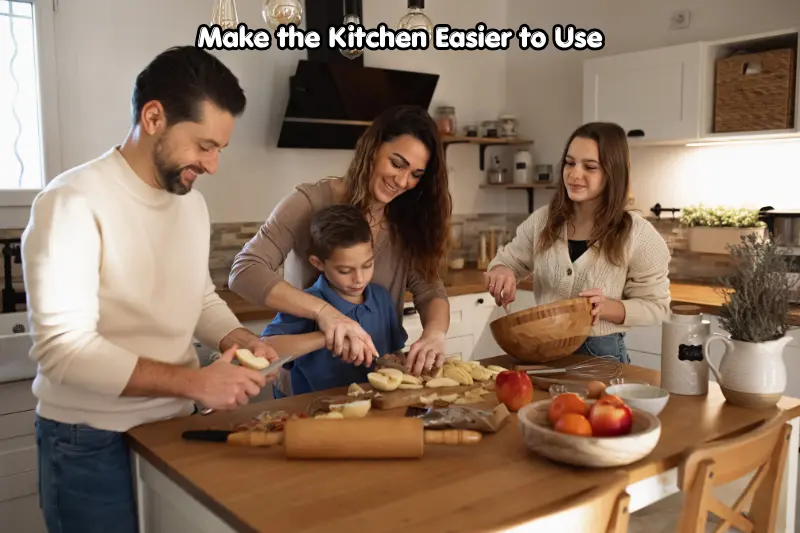
A kitchen becomes easier to maintain when similar items stay together. Keep cooking tools near the area where you use them. Store plates close to the dishwasher or drying area when practical. Group spices, baking supplies, and pantry foods into clear categories.
Use drawer dividers for small utensils and trays for bottles or jars. A lazy Susan can help with items stored in deep cabinets. Clear containers can be useful for dry foods, but they are not required. Use them only where they genuinely improve visibility and access.
One of the most practical home organization ideas for kitchens is to avoid filling every cabinet to maximum capacity. Leaving a little empty space makes it easier to put things away and reduces the chance of creating another clutter pile.
Store everyday cooking items where they are easiest to reach. Seasonal appliances and rarely used equipment can go into less accessible areas.
Organize the Bedroom Around Daily Habits
Your bedroom should support rest, dressing, and simple morning routines. Start with the surfaces that collect clutter most often, such as bedside tables, dressers, and chairs.
Keep only useful daily items on the nightstand. Use drawer dividers for smaller belongings and separate clothing by type or frequency of use. Under-bed storage can hold seasonal clothing, extra bedding, or luggage when the containers are easy to access.
For closets, consider a simple rule: everyday clothing should be easiest to reach. Less frequently used items can go higher or toward the back.
Bedroom home organization ideas should make getting ready easier rather than creating more work. If a storage system is difficult to use, simplify it.
Another helpful habit is to avoid using a chair as a permanent clothing storage area. Dirty clothes should go into the laundry basket, while clean clothes should return to their proper storage space.
Make the Bathroom Easy to Reset
Bathrooms usually contain many small products, which makes them easy to clutter. Group items by purpose rather than spreading them across every surface.
Use small bins for hair products, skincare, first-aid supplies, and cleaning items. A drawer organizer can stop small products from becoming a mixed pile. Use hooks for towels and make sure frequently used items are within easy reach.
Try to keep the countertop mostly clear. A clear surface makes cleaning faster and gives the room a calmer appearance.
Simple bathroom home organization ideas do not need expensive products. Small containers, drawer dividers, hooks, and sensible categories can make a noticeable difference.
Use Doors and Hidden Areas
The back of a door can become useful storage. Over-door organizers, hooks, and slim racks can hold lightweight items without using valuable floor space.
Look at other overlooked areas too. The space under the sink can hold cleaning supplies in a small bin. The side of a cabinet may support hooks. A narrow gap beside furniture may fit a slim storage unit.
These home organization ideas are especially helpful when you cannot add large furniture or make permanent changes.
Do not try to use every empty space simply because it is available. Storage should remain practical and should not make the room difficult to move through.
Improve Your Home Office
A home office can become messy when papers, cables, chargers, notebooks, and stationery have no fixed locations.
Start by separating active work from archived material. Keep only the items you use regularly on the desk. Use a small tray for papers that need attention and a separate place for documents that need to be stored.
Cable clips or simple cable ties can keep cords under control. Labeling chargers and accessories can also make them easier to identify.
Good home organization ideas for a workspace should protect your working surface. A clear desk gives you more room to focus and makes the end-of-day reset much faster.
If you work from home regularly, keep frequently used supplies close to your chair. Items that you rarely use can be stored elsewhere.
Create Better Storage for Small Items
Small items create large amounts of visual clutter because they are easy to scatter. Examples include batteries, remote controls, keys, pens, cosmetics, craft supplies, and charging cables.
Instead of using one large box for everything, divide small belongings into categories. Small bins, drawer dividers, trays, and labeled containers can make this much easier.
The goal is not to make every drawer look perfect. The goal is to make finding and returning items simple.
One of the easiest home organization ideas is to give small objects a specific category instead of allowing them to become a miscellaneous pile.
For example, keep batteries together, charging cables together, and writing supplies together. This reduces searching and makes putting things away easier.
Choose Storage Based on What You Own
A common mistake is buying storage first and deciding what to put inside later. Reverse the process.
Measure the area, identify the items that need storage, and then choose a solution that fits both the space and the objects. A deep container is not helpful for tiny items if you cannot see what is inside. A large shelf may also be wasteful if the items are small.
Good home organization ideas match storage to real needs instead of following a one-size-fits-all approach.
Think about access as well. If you use something every day, do not place it in a container that requires several steps to open and reach.
Use Labels Without Overcomplicating Things
Labels are useful when several people share a home or when storage contains many similar items. A simple label can tell everyone where something belongs.
You do not need to label every single basket. Focus on shared storage, pantry categories, seasonal items, paperwork, and boxes that are not opened often.
Labels should be clear and easy to understand. Avoid creating a complicated naming system that nobody wants to maintain.
For families, clear labels can turn useful home organization ideas into a system that everyone can follow instead of leaving all the organizing work to one person.
Build a Daily Reset Routine
Organization becomes much easier when you prevent clutter from building up. A short daily reset can be more effective than spending an entire weekend cleaning.
Before going to bed, return items to their normal places, clear major surfaces, put clothes where they belong, and deal with obvious trash. Even a few minutes can make the next morning feel more manageable.
Once a week, choose one small area for a deeper reset. This keeps the work from becoming overwhelming.
A daily reset is one of the simplest home organization ideas because it focuses on maintenance instead of repeatedly starting from zero.
You can make the routine even easier by connecting it to an existing habit, such as cleaning the kitchen after dinner or resetting the living room before bedtime.
Do Not Aim for a Perfect Home
A home is meant to be lived in. There will be laundry, dishes, toys, books, bags, and unfinished projects. A realistic organization system should handle normal life instead of demanding constant perfection.
If a system repeatedly fails, change the system rather than blaming yourself. Maybe the basket is too far away, the shelf is too high, or the category is too broad. Small adjustments can make an organizing method much easier to maintain.
The most sustainable home organization ideas are flexible. They should adapt when your routine changes rather than forcing you to follow an unrealistic schedule.
Affordable Ways to Organize Your Home
You do not need expensive products to make progress. Reuse sturdy boxes, small containers, jars, and baskets you already own when they are safe and practical.
Hooks can create quick storage for bags, towels, or tools. Tension rods can help divide some cabinets. Simple trays can group small items on a shelf. Repurposing existing items can also prevent unnecessary spending.
Many effective home organization ideas cost little because they improve how existing space is used rather than requiring new furniture.
Before buying an organizer, check whether you already have something that can perform the same job. This can save money and prevent unnecessary clutter from entering your home.
Common Organization Mistakes to Avoid
Buying too many containers is one common mistake. Containers can hide clutter without solving the reason it keeps returning.
Another mistake is organizing by appearance alone. A beautiful setup that is difficult to use will probably not last. Storage should be convenient for the people who use it.
Avoid creating categories that are too specific. If every small object has its own category, putting things away can become a chore. Use broad, practical groups that make sense to everyone in the household.
Finally, do not organize an entire home in one exhausting session unless you have the time and energy. Smaller projects are easier to finish and maintain.
These home organization ideas work best when you focus on convenience rather than perfection. A system that looks simple but works every day is better than a beautiful system that nobody uses.
How to Start Today
Choose one small area that bothers you most. It could be a kitchen drawer, bedside table, bathroom cabinet, entryway shelf, or desk.
Remove everything from that area. Clean the space, sort the items, remove what you no longer need, and return the useful items according to how often you use them.
Once the area works well, move to the next small zone. This approach gives you visible progress without creating a huge mess throughout the house.
If you need motivation, take a quick before-and-after photo. Seeing the difference can encourage you to continue with another area.
The best home organization ideas are the ones that fit your lifestyle. You do not need a picture-perfect home, a large budget, or a huge amount of free time. You need clear categories, sensible storage, and small habits that are easy to repeat.
Start small, make each item easier to find, and build systems that support the way you actually live. Over time, those small improvements can make your entire home feel calmer, cleaner, and more functional.
FAQs
What is the easiest way to start organizing a home?
Start with one small area instead of an entire room. Remove everything, declutter, clean the space, group similar items, and give the things you keep a clear home. This makes the process manageable and gives you a quick result.
How can I organize a small home without buying furniture?
Use vertical walls, hooks, the backs of doors, under-bed areas, cabinet interiors, and narrow gaps. These spaces can add useful storage without taking much floor space.
Should I declutter before buying storage?
Yes. Decluttering first helps you understand how much storage you actually need. It also prevents you from spending money on containers for items you no longer use.
How can I keep my home organized every day?
Use a short daily reset. Return items after use, clear visible surfaces, handle mail, and put clothes and shoes back where they belong. Small repeated actions are easier than occasional major cleanups.
What if my organization system keeps failing?
Look at the system rather than blaming yourself. Move storage closer to where the item is used, simplify categories, or choose a more accessible container. A good system should support your habits.